





Launch Devil Dash in your browser with no install. Select gate one from the stage list. The cube auto moves forward while you prepare to steer and jump through the opening trap layout.
What's Devil Dash game?

Devil Dash puts a small cube on a forward march through sixteen hell gates, each one a compact gauntlet of spikes, pits, and shifting platforms. The cube never stops rolling, so every stage becomes a rhythm puzzle wrapped inside an auto runner. Your job is to read the trap layout, jump at the right frame, and steer when the lane splits without touching anything lethal.
Clear all sixteen gates and the path opens toward the final challenge called Monster Gate. That end goal gives the campaign a clear finish line instead of an endless score chase. Early gates teach spacing and jump height. Later ones stack faster scroll speed, denser hazard rows, and layouts that punish players who rely on luck instead of memory.
Devil Dash loads in your browser on spacewaves2.net with no download. Restarts are instant, which suits a game built around trial, error, and one more attempt after a unfair looking spike.
Left, right, and jump only
Movement stays stripped down so reactions stay fast.
- Press the left and right arrow keys or A and D to steer the cube sideways.
- Press Spacebar or the up arrow to jump over gaps, spike rows, and low obstacles.
- On mobile, use on screen direction and jump controls where the embed provides them.
Three inputs sound easy until a gate mixes pit drops with moving platforms. A short hop might clear a spike row but land you on a tile that vanishes a second later. The control scheme is simple. The level design is not.
Sixteen gates and the Monster Gate finale
Progress is gate by gate. Each stage is a self contained hell themed room with its own trap set and pacing. You cannot skip ahead until the current gate is beaten, so improvement is visible on the map select screen as new doors unlock.
The campaign ends at Monster Gate, a capstone layout that combines the cruelest tricks from earlier stages. Players who rushed through the first ten gates without learning spike timing often hit a wall here. Treat the final gate as a exam on everything the prior fifteen taught.
Speed tests, memory tests, and gravity twists
Not every gate stresses the same skill.
- Speed gates push scroll tempo and demand quicker jump chains with less time to think.
- Memory gates hide surprise spikes behind innocent looking platforms, so you must recall exact jump order after a few deaths.
- Gravity and timing gates flip arc expectations with long falls, tight ceiling spikes, or platforms that move on a beat.
Knowing which type you are facing helps you slow down or commit. Speed gates reward aggression. Memory gates reward patience and note taking between runs.
Floors that lie and spikes that wait
Devil Dash loves deceptive geometry. A wide platform can collapse the moment you land. A safe looking gap can hide a pop up spike on the far side. Some routes look optional until you realize the main lane is a trap and the narrow side path is the real line.
Mobile platforms add another layer. You may need to ride a moving block across a deep hole, then jump off before it drifts into a spike wall. Hesitate and the cube falls. Jump early and you miss the landing zone entirely.
Auto run pace plus rhythm timing
The cube advances on its own, which keeps pressure constant. Obstacle clusters often arrive in patterns that feel musical even when you are not consciously counting beats. Faster gates sync hazard spawns with shorter gaps, so your jump rhythm must tighten as the stage goes on.
That blend of auto movement and timed hops is what separates Devil Dash from pure endless runners on this site. You are not chasing distance. You are solving a fixed route under rising tempo until the exit portal appears.
Learning layouts through failed runs
Most players beat hard gates by repetition, not by raw reflex alone. First run maps where spikes live. Second run tests jump height on the worst pit. Third run strings the full line together without pausing. The game expects that loop and gives you fast restarts to support it.
- Pause after a death only long enough to note what killed you, then restart immediately while the layout is vivid.
- On memory heavy gates, hum the jump sequence or tap the desk on each safe landing to lock the order in.
- Steer early before a split path, not at the edge of a pit, so you have room to correct.
- When scroll speed jumps mid gate, shorten your jumps. Big arcs waste time and land on traps tuned for fast pacing.
Other cube platform picks on spacewaves2.net
Devil Dash is a fixed sixteen gate campaign with hell themed traps. For different structures in the geometry folder, try these:
- Spooky Dash for Halloween rhythm routes with avatar picks and a custom map builder.
- Square Dash for a minimalist endless lane where distance is the only score.
- Geometrix for shape matching combat across forty two reflex stages.
- Geometry Games and Wave Games for the full browser arcade lists.
How to Play Devil Dash
1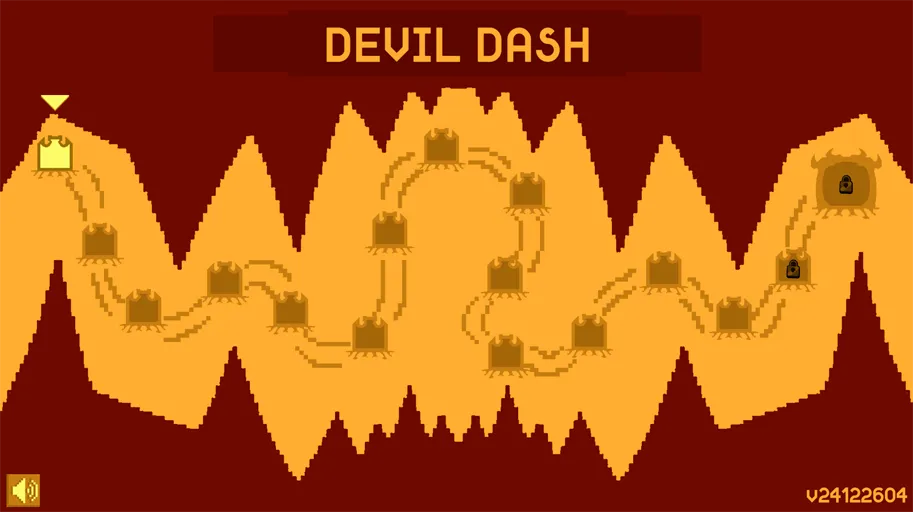
Enter the first hell gate
2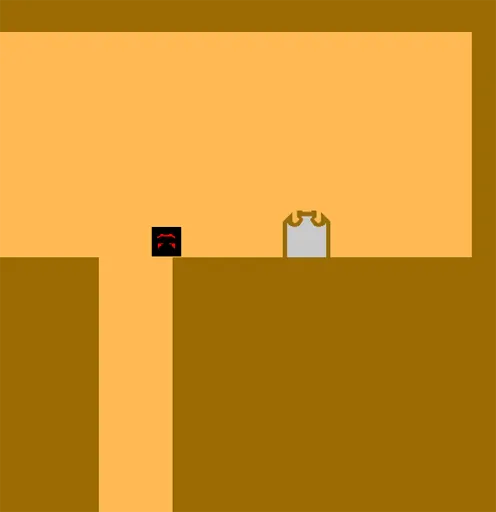
Steer and jump past spikes and pits
Use A and D or the arrow keys to move left and right. Press Spacebar or up to jump over spikes, holes, and moving platforms without touching hazards.
3
Clear sixteen gates to reach Monster Gate
Beat each hell gate to unlock the next. Learn fake floors and surprise spikes through quick retries. Finish all sixteen stages to face the Monster Gate finale and complete the campaign.
FAQs about Devil Dash
Yes. Devil Dash on spacewaves2.net runs in a browser tab at no charge. No account or download is needed to open the first gate.
There are sixteen hell gates plus a final Monster Gate stage. You must clear the campaign gates in order to reach the ending challenge.
Use left and right arrow keys or A and D to steer. Press Spacebar or the up arrow to jump. The cube moves forward automatically through each gate.
Layouts use fake floors, hidden spikes, moving platforms, and rising speed. Later gates test memory and timing as much as raw reflex speed.
Monster Gate is the final stage unlocked after you beat all sixteen hell gates. It combines the hardest trap types from the campaign into one closing run.