


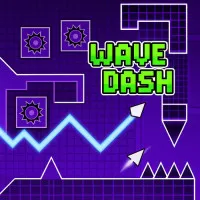



Press Play above to load Glitch Dash with no download. The cube starts its auto run through the first abstract terrain. Listen to the music so early obstacle bursts are easier to anticipate.
What's Glitch Dash game?
Glitch Dash throws a cube into a loud abstract tunnel where hammers, axes, laser walls, and spike rows pulse to aggressive music. Colors strobe, platforms slide, and the lane feels unstable on purpose. The cube keeps moving forward while you fight to stay alive one jump at a time. It is less about exploring a map and more about how far your reflexes hold before the next trap clips you.
Visuals lean surreal. Shapes pop with neon contrast, obstacles look exaggerated, and the whole stage vibrates with rhythm energy. That style makes hazards easy to spot in theory, yet the speed and pattern swaps still punish slow reads. Play loads in your browser on spacewaves2.net with no install step.
Some sections play like a straight endless runner. Others shift into tighter courses where the path builds block by block and the world can rotate when arrow shaped boxes trigger a flip. Across eight distinct terrains, layouts grow meaner and the pace keeps climbing until clears feel like a genuine reflex triumph.
Auto run cube and jump first survival
In the core dash lanes, the cube advances on its own. You do not steer speed. You only decide when to leave the ground or duck under a low threat. Blades sweep across the lane, laser grids blink open for a split second, and sliding floors drop if you stand still too long.
Because forward motion never pauses, every successful hop is a commitment. Hesitate and the scroll speed eats your reaction window. Jump early and you land straight into the next hazard the music queued up behind the first one.
Diamonds that buy checkpoint continues
Diamonds sit along risky lines throughout a run. Grabbing them matters beyond score chasing. Collected diamonds can be spent on control points so a crash resumes near your last safe segment instead of wiping the entire attempt.
That system rewards bold routes when you are learning a layout, then rewards thrift once you know where diamonds are optional. Spend too early and you may lack a continue on the brutal final third. Hoard everything and you repeat long opening sections after every mistake.
Eight terrains with rising pattern chaos
Progress unlocks new terrain themes, each with its own trap vocabulary and color mood. Early ground teaches basic jump spacing against spikes and simple gaps. Later terrains stack moving hammers, tighter laser timing, and routes that rewrite themselves mid run.
Clearing a terrain is a milestone, not a formality. The game expects multiple tries per map as you memorize where the lane twists and which audio beats mark safe landing frames. Victory on a late terrain usually means you can read chaos instead of merely reacting to it.
Arrow boxes and full stage rotation
One of the crueler twists is the arrow shaped box that spins the entire environment. Floors become walls in a blink, and a jump that was correct a second ago now sends the cube into empty space. These moments demand instant adaptation rather than rote memory from the previous attempt.
When a rotation event is coming, shorten your inputs and watch the silhouette of the next platform chunk instead of the background flash. Players who stare at particle effects usually miss the new floor angle until it is too late.
Music locked hazards and sensory overload
Obstacle bursts often align with drum hits and synth stabs. Hearing the track helps you predict when a laser wall opens or when a hammer swing reaches the center lane. Visual noise is high, so audio doubles as a timing guide on repeat attempts.
The tension is deliberate. Fast music plus saturated color can overwhelm first time players, which is why checkpoint diamonds and terrain gating exist. You are meant to fail loudly, adjust, and push again with a clearer sense of the beat map.
Jump and four way steering inputs
Controls stay arcade simple but expand when the route demands precision steering.
- Press Spacebar, W, or the up arrow to jump. Click the mouse for the same hop on desktop.
- Press the down arrow to duck or bow under low obstacles when a section requires it.
- Use the left and right arrow keys to shift sideways on lanes that split or drift.
- On mobile, use the on screen touch controls provided inside the embed player.
Most deaths come from using jump when the stage wanted a duck, or from steering too late after a rotation. Match the input to the threat height before you worry about speed.
Staying alive when the lane glitches out
- Learn the first ten seconds of a terrain cold before chasing diamonds off the safe line.
- Save checkpoint spends for the third of a map where trap density spikes, not the opening tutorial stretch.
- After any world rotation, ignore your previous muscle memory until you confirm the new floor vector.
- Restart quickly while the music loop is in your head so jump timing stays attached to the beat.
More abstract runners on spacewaves2.net
Glitch Dash focuses on sensory overload and checkpoint diamond strategy. For different geometry arcade rules here, try these pages:
- Square Dash for a clean minimalist endless jump lane without terrain unlocks.
- Dashmetry Winter for holiday rhythm stages with Classic and Endless mode splits.
- Geometrix for shape matching reflex combat across forty two levels.
- Geometry Games and Wave Games for the full site directories.
How to Play Glitch Dash
1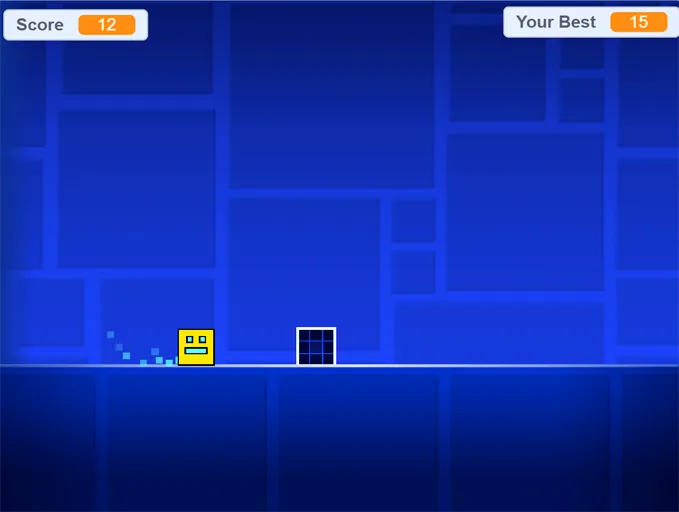
Launch Glitch Dash in the browser
2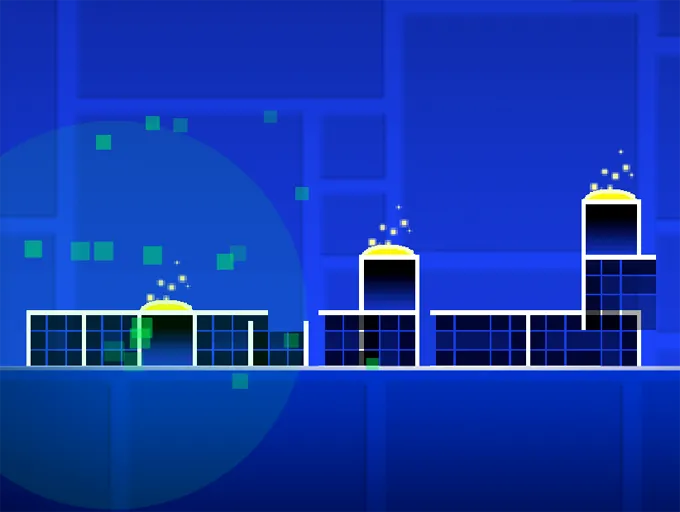
Jump, duck, and steer past glitch traps
Use Spacebar, W, the up arrow, or a click to jump. Press down to duck and left or right to shift lanes when hammers, lasers, spikes, or rotating arrow boxes rewrite the route.
3
Grab diamonds and clear eight terrains
Collect diamonds to unlock checkpoint continues instead of restarting from zero. Beat each terrain to unlock tougher glitch layouts with faster pacing and sharper trap chains until all eight zones are cleared.
FAQs about Glitch Dash
Yes. Glitch Dash on spacewaves2.net opens in a browser tab at no charge. No account or install is required to start a run.
It is a fast abstract obstacle runner where a cube auto scrolls through music synced hazard lanes. Later terrains add rotation twists and denser trap patterns across eight unlockable zones.
Press Spacebar, W, the up arrow, or click to jump. Use the down arrow to duck and left or right arrows to steer when the lane splits. Tap the embed touch controls on mobile.
Diamonds collected during a run can be spent on control points. That lets you continue from a checkpoint after a crash instead of replaying the entire terrain from the start.
There are eight distinct terrains with rising difficulty. Clearing one unlocks the next, with tougher obstacles and faster pacing on later maps.