




Press Play above to open Plonky in your browser with no download. Read the room before you move: spot crushers, saws, carts, and switches that might be part of the solution path.
What's Plonky game?

Plonky is a physics comedy platformer built around one joke that never gets old: your hero is a floppy ragdoll who obeys gravity more than he obeys you. Levels look like classic obstacle courses, but movement wobbles, limbs swing, and a jump that looked perfect on paper can end in a faceplant on a spike. That looseness is the point. You are not chasing frame perfect hops. You are bending the environment until the exit door is reachable.
Each stage mixes slapstick failure with genuine puzzle thinking. Crushers time their drops, saw blades spin on fixed rails, and carts sit waiting for a push that might save your run or launch you into a wall. Because physics rules every collision, two attempts on the same screen rarely play out identically, which keeps even repeated deaths entertaining instead of purely frustrating.
Launch Plonky on spacewaves2.net inside a browser. No install required. Sessions work well as a five minute laugh or a longer push to clear a stubborn contraption room.
Why Plonky refuses to move like a normal platformer
Most platform heroes snap to inputs. Plonky sways, stumbles, and reacts to slopes, ropes, and moving platforms with full ragdoll momentum. A gentle tap can snowball into a rolling tumble across half the stage. That unpredictability forces a different mindset. You plan routes around physics outcomes, not pixel gaps alone.
Winning often means accepting a messy landing if the body ends up past the hazard line. Clean animation is rare. Clever problem solving is not.
Every trap is a small puzzle
Obstacles are not only things to jump over. Many need setup.
- Crushing blocks demand timing or a switch flip before you cross the danger zone.
- Spinning saws sometimes require a rope swing or a well aimed flop instead of a straight hop.
- Carts and weights can block a press, hold a bridge, or counterbalance a lift if you push from the right angle.
- Pulleys and levers open paths that stay shut until you interact with the scene.
Trial and error is part of the design. A failed try still teaches which object moved and whether the trap reset. Laugh at the ragdoll pileup, then adjust one variable on the next attempt.
Push, pull, swing, and flop on purpose
Progress verbs in Plonky are physical verbs. You shove crates, yank hanging ropes, ride momentum through a gap, or let gravity do the work when a jump would overshoot. Clinging and somersaulting through a rotating hazard feels chaotic, yet the level geometry usually hints at the intended gadget chain if you pause to look before rushing.
When a stage stalls, scan for unused switches or a cart that only moved halfway. The solution is often an environmental tool you walked past while recovering from the last wipeout.
Keyboard and touch controls
Inputs stay simple so you can focus on scene manipulation.
- Press A and D or the left and right arrow keys to move sideways.
- Press W, Spacebar, or the up arrow to jump.
- Press S or the down arrow to climb down ledges or crouch under low threats.
- On mobile, use the touch buttons for the same move, jump, and descend actions.
Because the body is loose, tap movement gently near ledges. Hard mashing often builds extra momentum that sends Plonky past the landing zone you wanted.
Hazards that send you back to the start
Spike pits, timed crushers, and bladed spinners end a run on contact. There is no forgiving hit box shrink here. Mistakes reset the attempt, but restarts are quick enough that experimenting with a cart push or pulley pull does not feel punishing.
Watch crusher rhythm before you commit. Blades often telegraph speed through sound or rotation cycle. Rushing the first safe looking gap is how most players learn the timing the hard way.
Who gets the most out of Plonky
Plonky fits players who want physics comedy instead of rhythm perfection. If you enjoy watching a character flail while you figure out a gadget puzzle, this is your lane. It also works as a short stress relief game: failures are funny, victories feel earned, and levels rarely overstay their welcome.
Hardcore speedrun platform fans may need a mental shift. Plonky rewards patience and environmental literacy more than raw reaction time.
Tips when the ragdoll fights back
- Pause after a death to see which trap actually killed you, not which jump looked silliest.
- Interact with every lever once per stage so you know what each switch controls.
- Use small movement steps on narrow ledges to limit unwanted tumble speed.
- If a flop lands you past a saw, stop adjusting and take the exit before physics changes its mind.
More wave and geometry picks on spacewaves2.net
Plonky is a slow brain, fast laugh physics platformer. For pure speed or tight rhythm elsewhere on the site, try these:
- Death Run 3D for first person tunnel dodging at extreme velocity.
- Slope 3 for neon downhill ball steering with rising speed.
- Egg Dash for beat locked holiday platform stages with practice checkpoints.
- Wave Games and Geometry Games for the full browser arcade lists.
How to Play Plonky
1
Enter a Plonky trap stage
2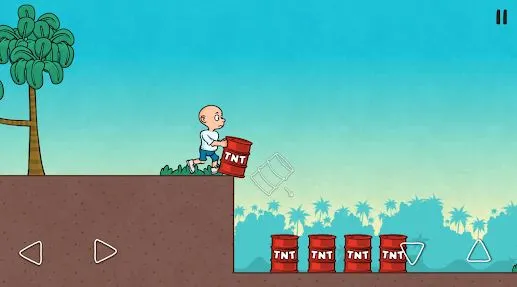
Move, jump, and manipulate gadgets
Use A and D or arrow keys to walk. Press W or Spacebar to jump and S to climb down. Push carts, pull pulleys, and flip switches so the ragdoll can cross hazards alive.
3
Flop through chaos and reach the exit
Expect wobbly landings and funny fails while you learn each contraption. Time jumps past crushers and blades, swing when ropes help, and reach the level exit even if the ragdoll looks ridiculous doing it.
FAQs about Plonky
Yes. Plonky on spacewaves2.net runs in a browser tab at no charge. No account or install is needed to start the first stage.
Plonky is a ragdoll physics puzzle platformer. You guide a floppy hero through trap filled levels using jumps, pushes, pulls, and environmental gadgets rather than tight precision platforming alone.
Use A and D or the arrow keys to move left and right. Press W, Spacebar, or up to jump. Press S or down to climb down or crouch. Touch controls on mobile mirror the same actions.
The hero uses full ragdoll physics, so limbs wobble and momentum carries between inputs. That chaos is intentional and part of the puzzle comedy rather than a control bug.
Look for carts, pulleys, levers, and switches that change the stage layout. Time jumps around crushers and saws, and use trial and error to see which physics trick opens the safe route to the exit.