





Press Play above to open Slope 3 in your browser with no download. The ball begins rolling downhill immediately. Take a second to feel how sensitive left and right steering is before speed ramps up.
What's Slope 3 game?
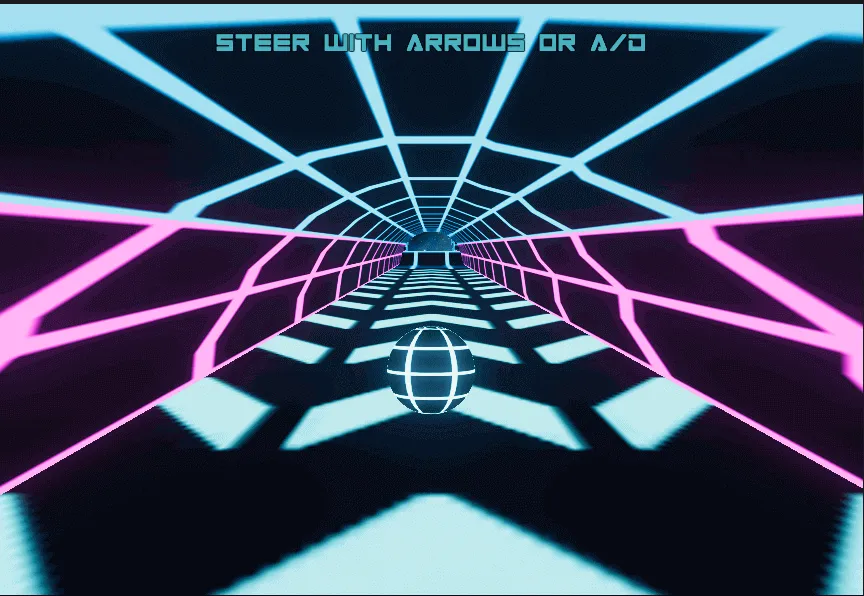
Slope 3 sends a glowing ball down a steep neon runway that never really ends. The track drops away beneath you, speed keeps climbing, and the only job is to stay on the safe surface while red hazards and open gaps rush toward the camera. It is a pure reflex endurance game: no levels to clear, no story gate, just distance and the score number ticking upward until one mistake sends the ball into the void.
This third entry in the slope ball lineage pushes harder on presentation and physics than the minimalist original. Lighting is richer, turns feel sharper, and the course shifts shape more aggressively as velocity builds. The core fantasy stays the same, but the ride feels denser, which is why players who bounced off older slope versions often stick with this one longer.
Load Slope 3 on spacewaves2.net inside a browser tab. There is nothing to install. A run can end in ten seconds or stretch into a personal best chase that eats an entire coffee break.
Forward roll with left and right steering
The ball advances on its own. You never press gas or brake. Input is only lateral steering through the arrow keys or A and D on desktop. Touch controls on mobile mirror the same left right intent.
Steering is sensitive. A tiny tap can swing the ball across several lane widths, which is why smooth micro corrections beat dramatic sweeps. Panic turns at high speed are the fastest route to flying off the edge or kissing a red block.
Green tiles you trust, red tiles you avoid
Color coding keeps readability high even when the world blurs from speed. Green surfaces are safe footing. Red blocks and barriers end the run on contact. The screen may flash red when you crash, but during play your eyes should live on the lane ahead, not on decorative glow.
Do not let neon polish distract you from that binary rule. Pretty lighting is atmosphere. Survival is still about spotting the next safe rectangle before the ball reaches it.
A runway that bends, tilts, and breaks apart
Tracks are not flat conveyor belts. Sections bank left, dip downward, or pinch into narrow bridges. Missing tiles create pits that demand perfect centering. Sharp corners appear with little warning once pace crosses a threshold, forcing you to plan steering before the turn enters view.
Procedural style sequencing means two runs rarely feel identical. You cannot memorize one perfect script forever. Instead you build general habits: stay centered, read shadows and angle changes, and adjust early when the slope starts to twist.
Speed curve and score chasing
Early seconds feel almost calm. The ball rolls fast but reactable. Then acceleration compounds. Reaction windows shrink, gaps look smaller, and even experienced players top out within a few minutes. That curve is intentional. It turns every run into a short intensity spike rather than a long grind.
Your score is distance survived. Casual players often land between fifty and one hundred points on early attempts. Breaking three hundred requires steady hands and repeated practice. Anything beyond that puts you in dedicated hobbyist territory. Restart is instant, so improving by five or ten points per session still feels worthwhile.
What changed from classic slope runners
Older slope titles leaned on bare geometry and a single endless template. Slope 3 layers on updated 3D presentation, tighter physics feedback, and track pieces that rotate and reshape more often. Difficulty still ramps the same way, but the visual cues and motion sell speed more convincingly.
If you liked the original loop but wanted more sensory punch, this version is the middle ground: same one ball one slope premise, louder neon identity, and busier course grammar without adding complex buttons.
Habits that extend a run
- Hover near the center of the lane so you have equal room to dodge left or right.
- Look ahead of the ball, not directly underneath it, to spot red blocks and gaps earlier.
- Use small taps instead of held turns when correcting line position.
- After a crash at the same spot twice, change approach on the third try rather than repeating the same steer timing.
- Full screen view on desktop can make distant hazards easier to read during fast segments.
Sound, focus, and short session loops
Electronic beats underline the sense of motion without drowning out collision feedback. Audio works best as a tempo anchor: when you sync breathing and taps to the rhythm, steering feels less frantic during mid run speed jumps.
Because there are no checkpoints, each failure is a clean slate. That keeps sessions bite sized. Play three runs during a break, note one mistake pattern, fix it on the fourth attempt, and walk away when focus slips. The game rewards patience more than marathon grinding in one sitting.
More speed arcade picks on spacewaves2.net
Slope 3 is a 3D ball endurance test. For different wave and geometry speed games here, try these:
- Wave Road for neon tunnel surfing with hold to rise and release to drop control.
- Wave Runner Game for diagonal rocket climbs through shifting hazard fields.
- Square Dash for a flat 2D endless jump lane with minimalist blocks.
- Wave Games and Geometry Games for every browser arcade page on the site.
How to Play Slope 3
1
Drop the ball onto the neon slope
2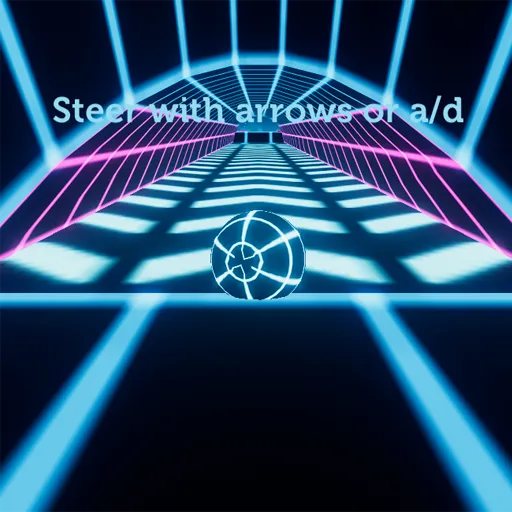
Steer with arrows or A and D
Use the left and right arrow keys or A and D to guide the ball. Stay on green safe tiles, dodge red blocks, and thread narrow bridges without oversteering at high velocity.
3
Survive longer and beat your score
Keep the ball on the track as acceleration climbs. Watch gaps and sudden turns ahead of the ball, restart fast after crashes, and push your distance record higher each session.
FAQs about Slope 3
Yes. Slope 3 on spacewaves2.net runs in a browser tab at no charge. No account or install is required to start rolling.
The ball moves forward automatically. Use left and right arrow keys or A and D to steer. Touch controls on mobile slide the ball sideways along the slope.
Contact with red obstacles ends the run immediately. Green surfaces are safe. Falling off the edge into open space also ends the attempt.
No. Slope 3 is an endless endurance mode. The goal is to survive as long as possible and push your distance score higher each try.
New players often score under one hundred points while learning steering sensitivity. Scores above three hundred are considered strong for most players and require calm micro corrections at high speed.